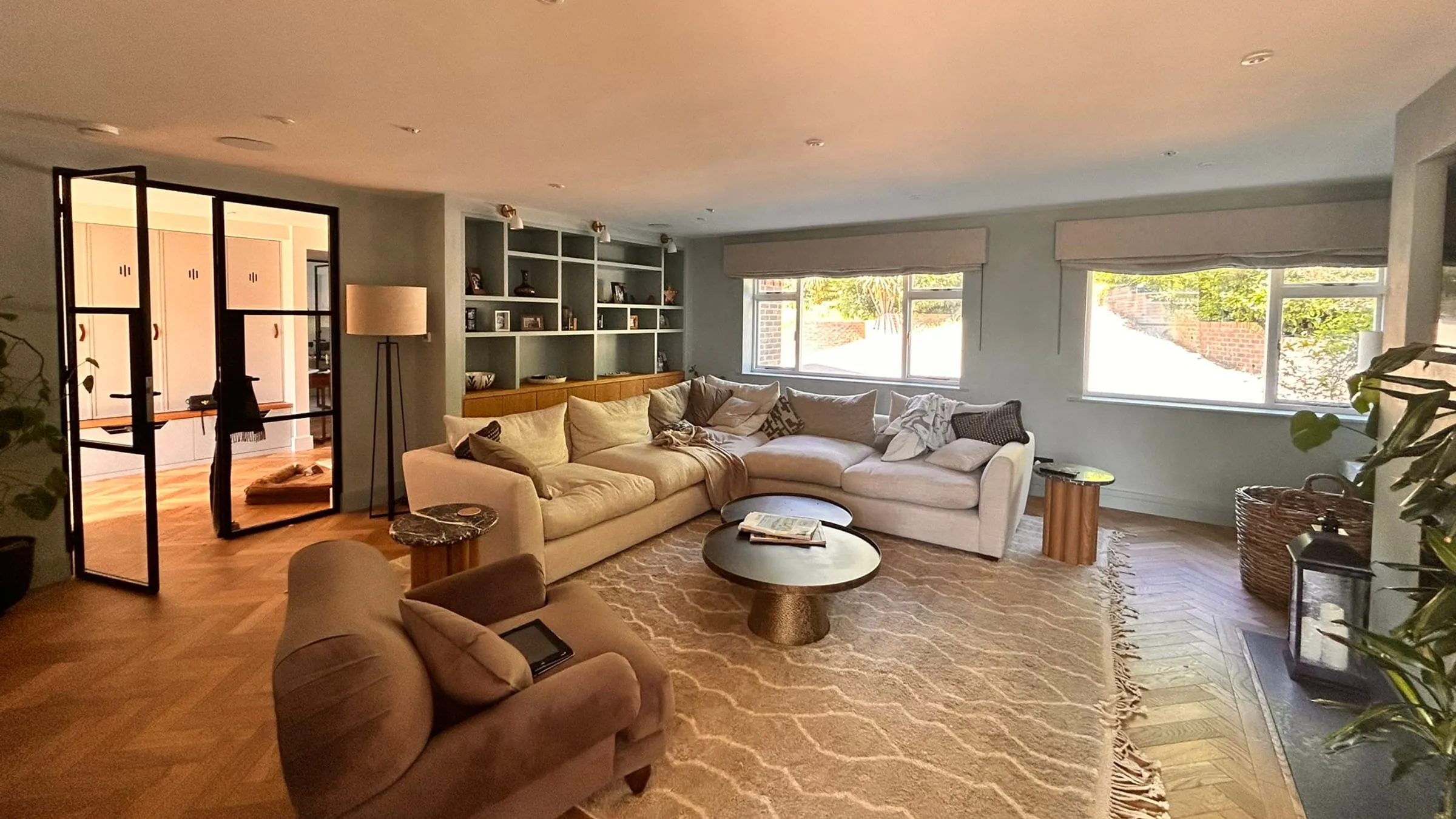
Knocking through is usually the first idea. The kitchen is small, the dining room is barely used, and the wall between them seems to be the only thing in the way. Take it out, add some glass at the back, and open-plan living will finally let the family be in one place.
Sometimes that is exactly right. Sometimes the family ends up in one big room where the television competes with the extractor fan, there is nowhere to put a coat, and the only quiet place left in the house is the car.
Is open-plan living a good idea?
For most families, partly. A combined kitchen, dining and sitting space lets people be together while doing different things: cooking, homework, sitting down at the end of the day. It lets daylight from the garden side reach further into the house. And it can make a house feel bigger without adding a square metre.
The question is how much of the house to open, not whether to open it at all.
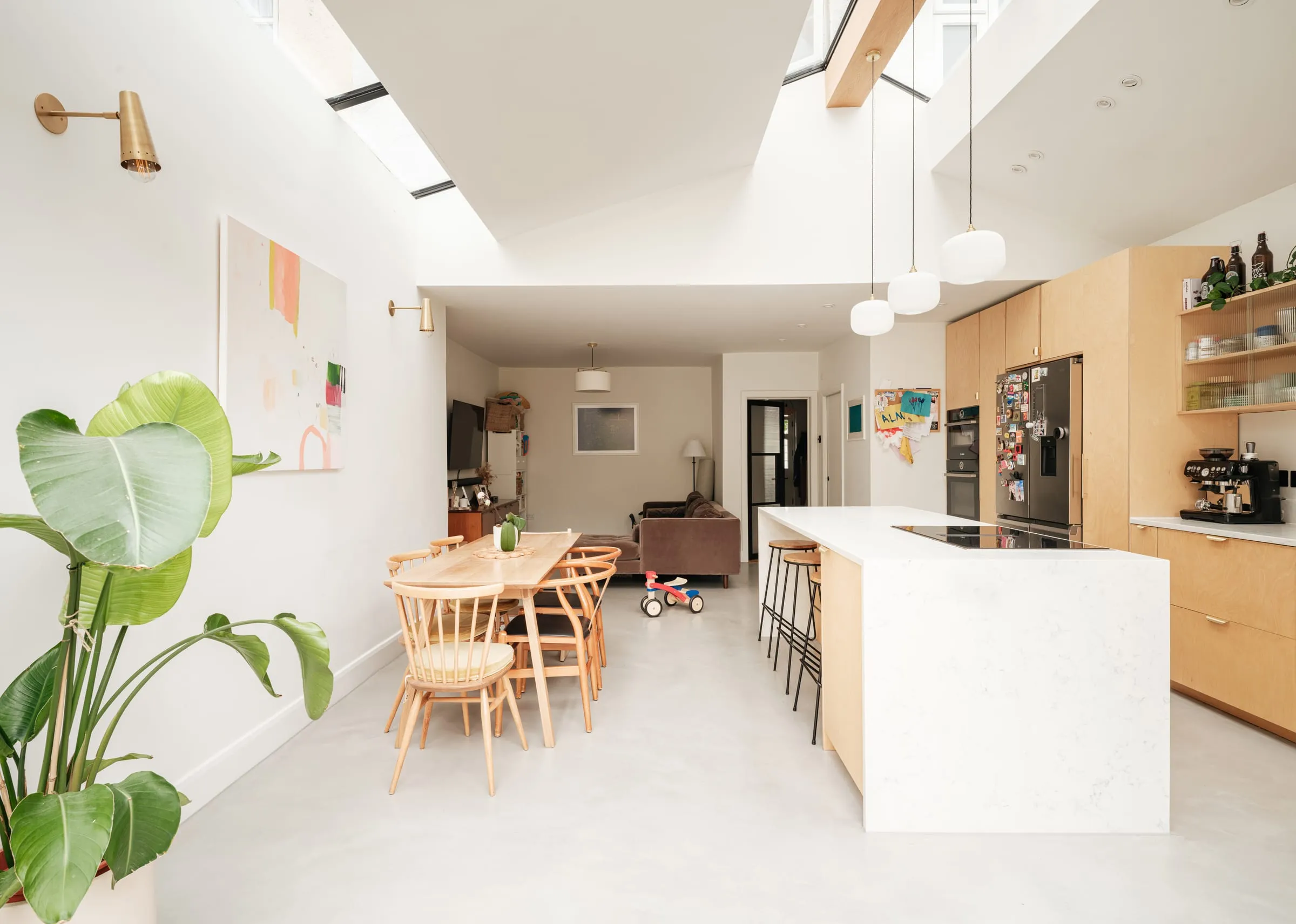
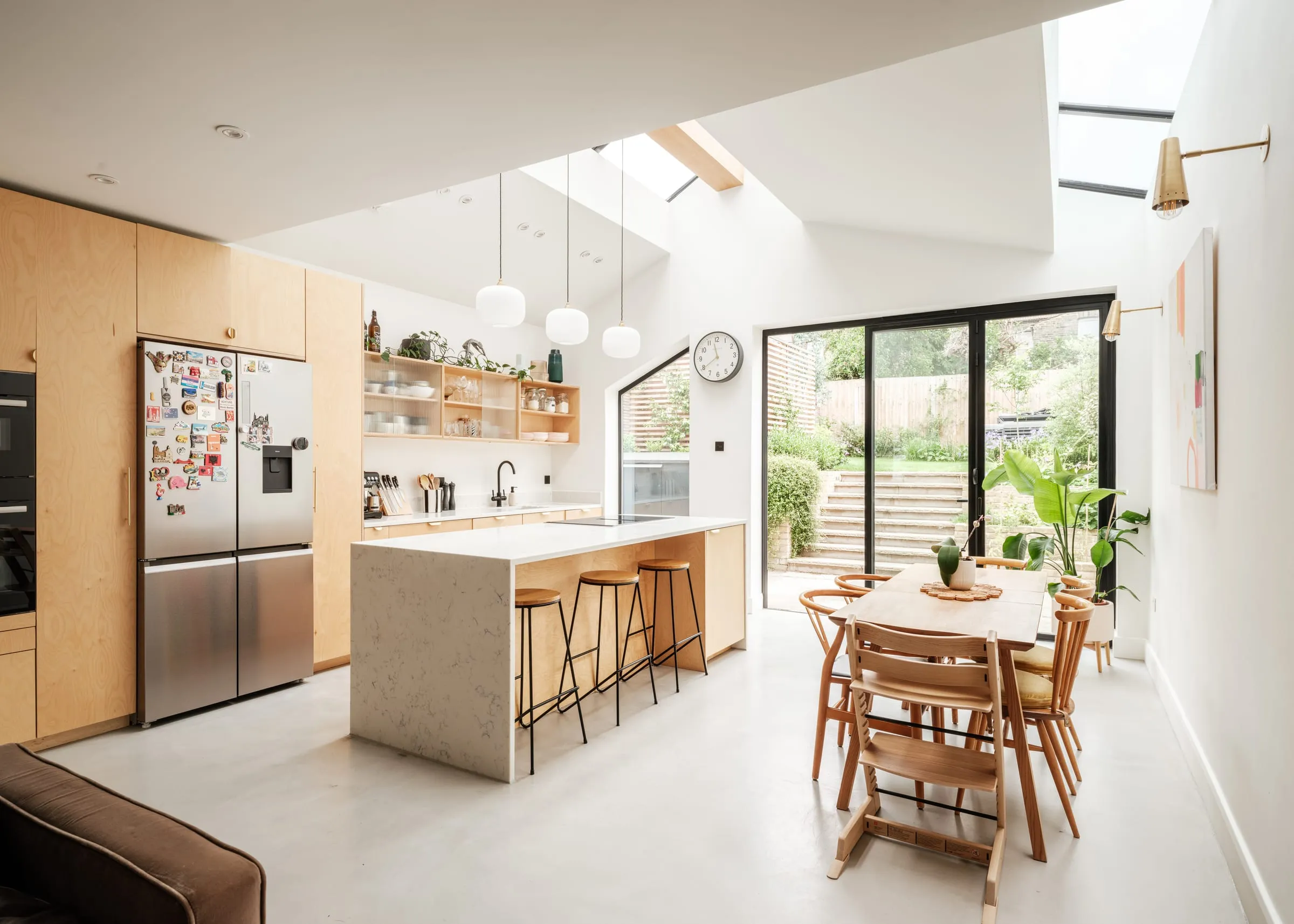
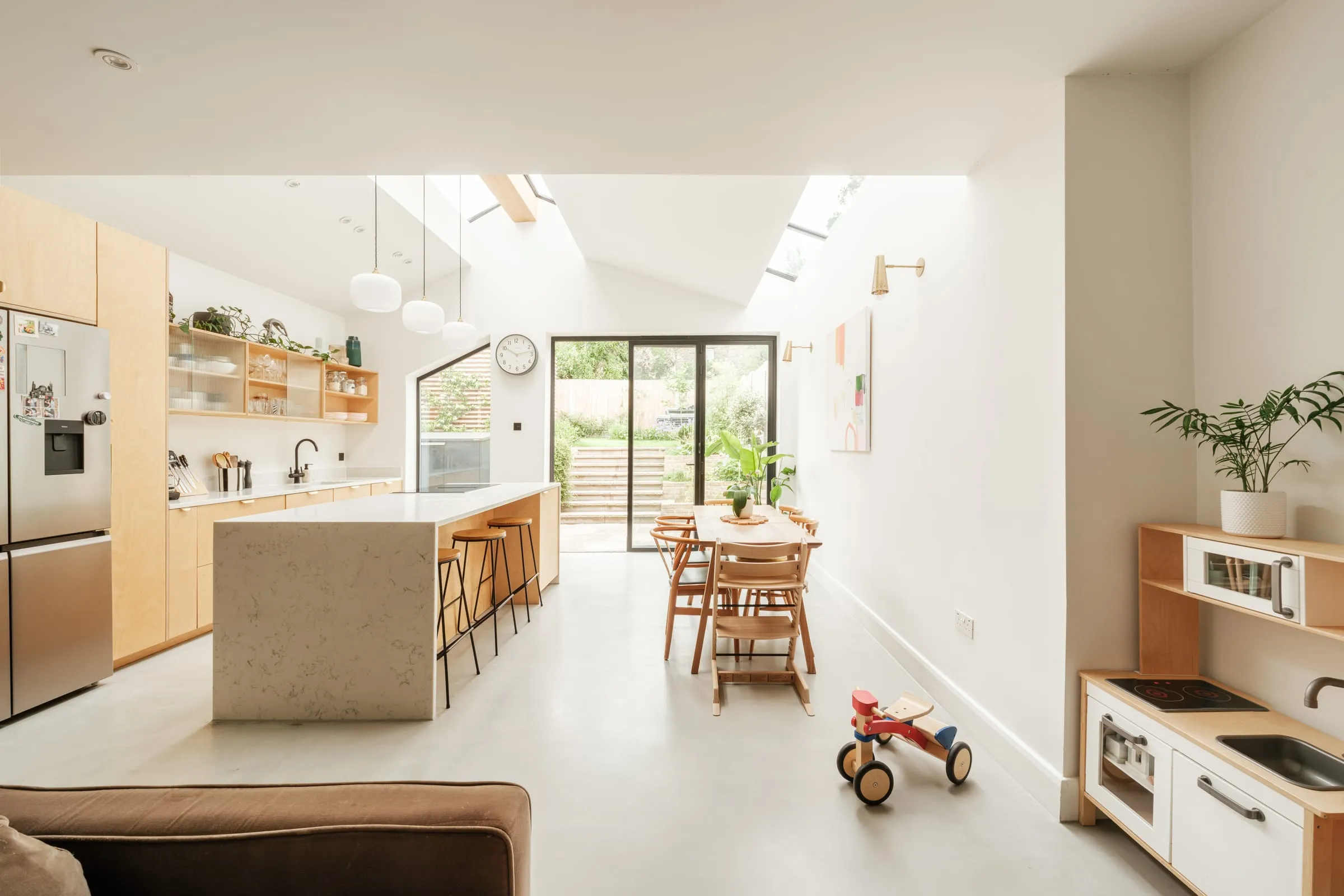
The Walthamstow rear extension. Photograph: Fred Howarth.
What are the downsides of open-plan living?
Sound travels. Hard floors, a large glazed wall and a flat ceiling make a room echo, and the dishwasher, the television and a phone call all end up in the same space. Rugs and curtains help, but the bigger wins are decided at the design stage: a change in ceiling height, a run of deep shelving between zones, or simply not opening everything up.
Cooking reaches the sofa. Unless the extraction is good and ducted properly to the outside, the sitting area smells of whatever was for dinner.
Heating is harder. A large room with a lot of glass is harder to keep evenly warm, so the heating, whether underfloor or radiators where there is wall for them, has to be planned with the layout.
Storage disappears. Every wall you take out was holding something: a cupboard, a radiator, the sofa, the pictures. Open-plan rooms need more built-in storage than people expect, and it needs drawing at the start, not adding afterwards.
Can you knock through a load-bearing wall?
Usually, yes, with proper design. Taking out a load-bearing wall means a structural engineer, a steel beam, building control approval and, in a semi or terrace where the steel bears on the shared wall, party wall notices. On jobs I tendered in 2025 and 2026, steel to open up a rear wall came to £3,000–£10,000, excluding VAT and rounded.
The beam also decides the ceiling. A steel that drops below the ceiling line reads as a step across the room, which is fine if it was designed as a step and irritating if it was not. Where a flat ceiling matters, the steel can sometimes sit within the depth of the floor above, as it did on the East Molesey extension.
Does open-plan affect fire safety?
It can, and this is the one people miss. In a house with a floor more than 4.5 metres above ground level, which in practice means three storeys, including a two-storey house with a loft conversion, building regulations expect a protected route from the top floor down the stairs to an outside door. An open-plan ground floor where the stairs come down into the kitchen breaks that route.
There are accepted ways round it, such as a sprinkler system with fire-resisting separation between the ground floor and the floors above, but they have to be designed in, and they affect the layout. It is easy to miss when a house that already has a loft room is opened up downstairs, or when a loft conversion is planned a few years after the knock-through.
Is broken-plan better than open-plan?
Often. The ground floors that work best are rarely fully open. A kitchen and dining space open to the garden, with the sitting room kept as a separate room you can close the door on. A wide opening between two rooms with a pair of glazed doors, so it is one room on a Saturday and two on a weeknight. A step in the ceiling, a change of floor or a run of joinery that marks the edge of the kitchen without a wall.
In Richmond, the design gives the new kitchen, dining and living room some definition with the island and the living area, and turns the old garage into a snug: a quieter room away from the main space for reading or watching a film.
Jeremy and Mary-Jane in Guildford had been told by every builder they spoke to that the answer was to knock through and extend into the garden. Walking through the house, the problem was not a lack of floor area. It was flow: how you got from the kitchen to the table to the garden, and where everyone ended up in the evening. Their dining room was opened to the kitchen, and the front room went back to being a snug. The scheme they built was smaller than the builders’ idea.
“It’s changed how we live. We still regularly have to pinch ourselves.”
Jeremy and Mary-Jane, Guildford
Open-plan living in older Surrey houses
Many Surrey homes are Victorian, Edwardian or interwar, with separate front and back rooms, a central hall and fireplaces on the party wall. Those houses can take a more open plan well, but the original rooms often have proportions, cornices and fireplaces worth keeping, and knocking everything into one tends to lose them. Keeping the front room as a room, and opening up the back of the house to the garden, often gives the best of both. There is more on this balance in blending modern and traditional design in Surrey homes.
Questions to answer before the wall comes out
Before anything is knocked through, I want to know how you use the house on an ordinary weekday, not on Christmas Day. Where does everyone end up at six o’clock? Where do the post, the school bags and the laundry go? Who wants quiet, and where? Is there a room in the roof, or might there be one day?
The answers decide how open the plan should be, which wall can go, and which one is better left standing. If the change involves new floor area as well, planning a kitchen extension and the home renovations and extensions page cover that side.
If you’re weighing up a knock-through, a free 15-minute Clarity Call is a sensible first step.
Questions people ask about open-plan living
Do you need planning permission to knock through internal walls? Not usually. Taking out a wall inside the house is not something the planning department controls, unless the house is listed, where listed building consent covers internal work too. What it does need is building regulations approval, because the new beam is structural, and a structural engineer to design it. In a semi or a terrace where the steel bears on the shared wall, party wall notices to the neighbour come first as well.
How do you stop an open-plan room being noisy? Mostly at the design stage. Rugs, curtains and soft furniture take the edge off, but the bigger wins are a change in ceiling height between zones, a run of deep shelving or joinery that breaks the room up, and keeping one room, usually the sitting room, behind a door you can close. Good extraction ducted to the outside deals with the cooking. Hard floors under a flat ceiling and a big glazed wall will always echo more than a broken-plan layout.
Can I open up the ground floor if the house has a loft conversion? Yes, but the fire escape has to be designed in. Once a house has a floor more than 4.5 metres above the ground, which a loft conversion usually means, building regulations expect a protected route from the top floor down the stairs to an outside door. Stairs that land in an open kitchen break that route. There are accepted answers, such as sprinklers with fire-resisting separation between floors, but they shape the layout, so plan for them even if the loft conversion is years away.