Architects in Dorking and Mole Valley
Most people who contact us about a home in Dorking are not short of ideas. They have usually been talking about the same extension for a year or two, they have a folder of photographs, and they have had one conversation with a builder that left them less sure than before.
What they want are straight answers to three questions. Will we get planning? What will it really cost? And who can we trust to run it properly? Those three questions are the whole job.
We are based in Woking, about half an hour away, and we are currently working on homes in Dorking and the villages around it, from first Clarity Packs to planning applications.
From 1 April 2027, Mole Valley becomes part of the new East Surrey Council, which takes over planning from Mole Valley District Council, alongside Elmbridge, where we also work (see our page on Cobham, Esher and Elmbridge).
Why Dorking is harder than it looks
Dorking sits in one of the most heavily protected parts of Surrey, and that is the first thing to understand about building here.
The local plan. Mole Valley District Council adopted its current Local Plan, covering 2020 to 2039, on 15 October 2024. Its policies on design, the character of places and the amenity of neighbours are what your application is measured against.
The Green Belt. Most of the countryside around the town is Metropolitan Green Belt. That does not stop a householder extension, but it changes what is possible and how it has to be argued. The size of what you add, its proportion to the original house, and whether the result still reads as the same home all carry real weight.
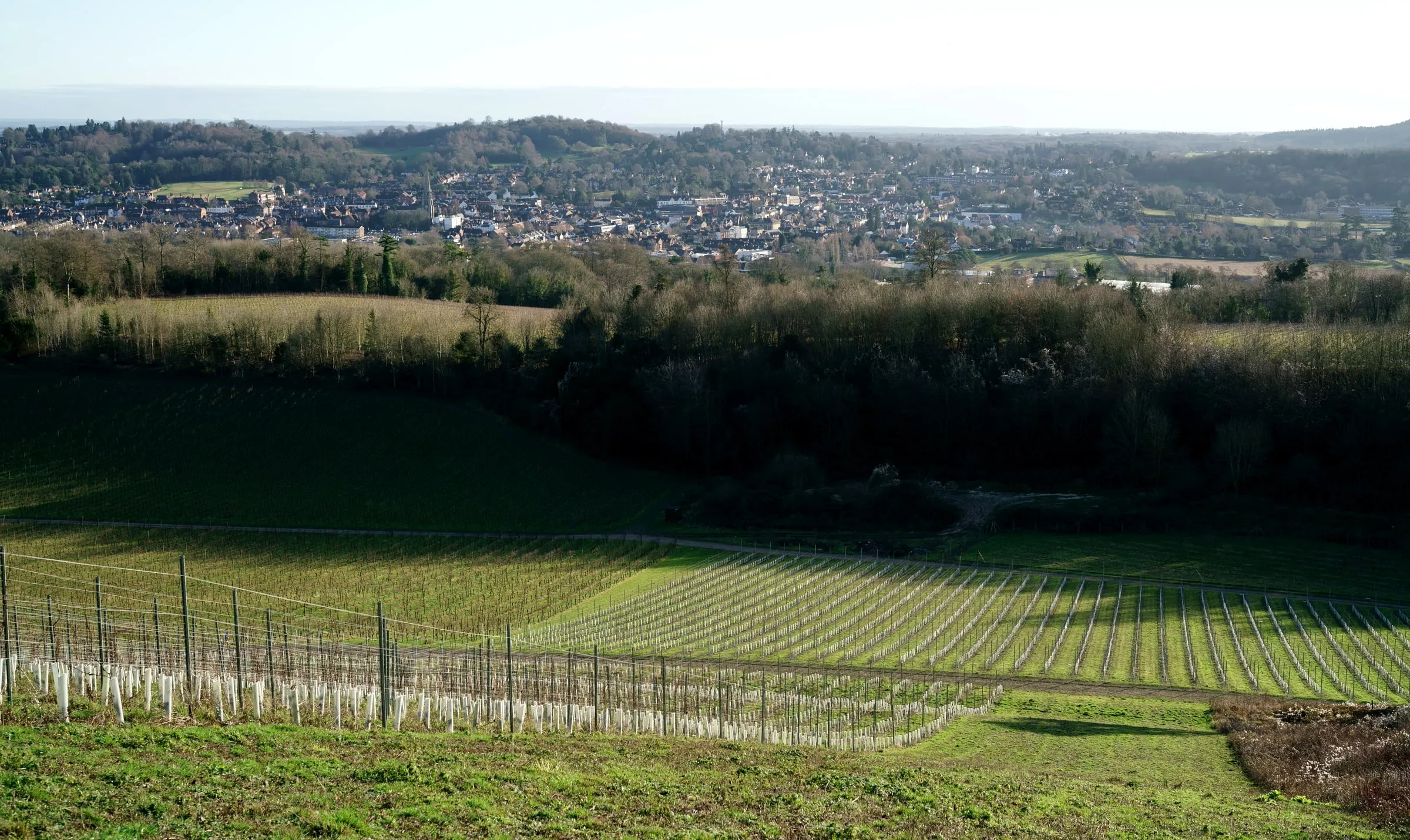
The Surrey Hills. Box Hill, Ranmore and much of the land to the south and west of the town sit within the Surrey Hills National Landscape, the designation that was called an Area of Outstanding Natural Beauty until 2023. Permitted development rights are narrower there, and the council looks closely at materials and at how a building sits in views from the hills.
The town itself. The historic centre has a conservation area and many listed buildings, there are tree preservation orders across the district, and land along the Pipp Brook and the River Mole carries flood risk. Some streets have an Article 4 direction, which removes permitted development rights a homeowner would otherwise assume they had.
Several of these can land on one plot at once. In Dorking that is normal, not unusual. None of it means the answer is no. It means the answer is not obvious from the street, and the order you do things in matters more here than almost anywhere else in the county.
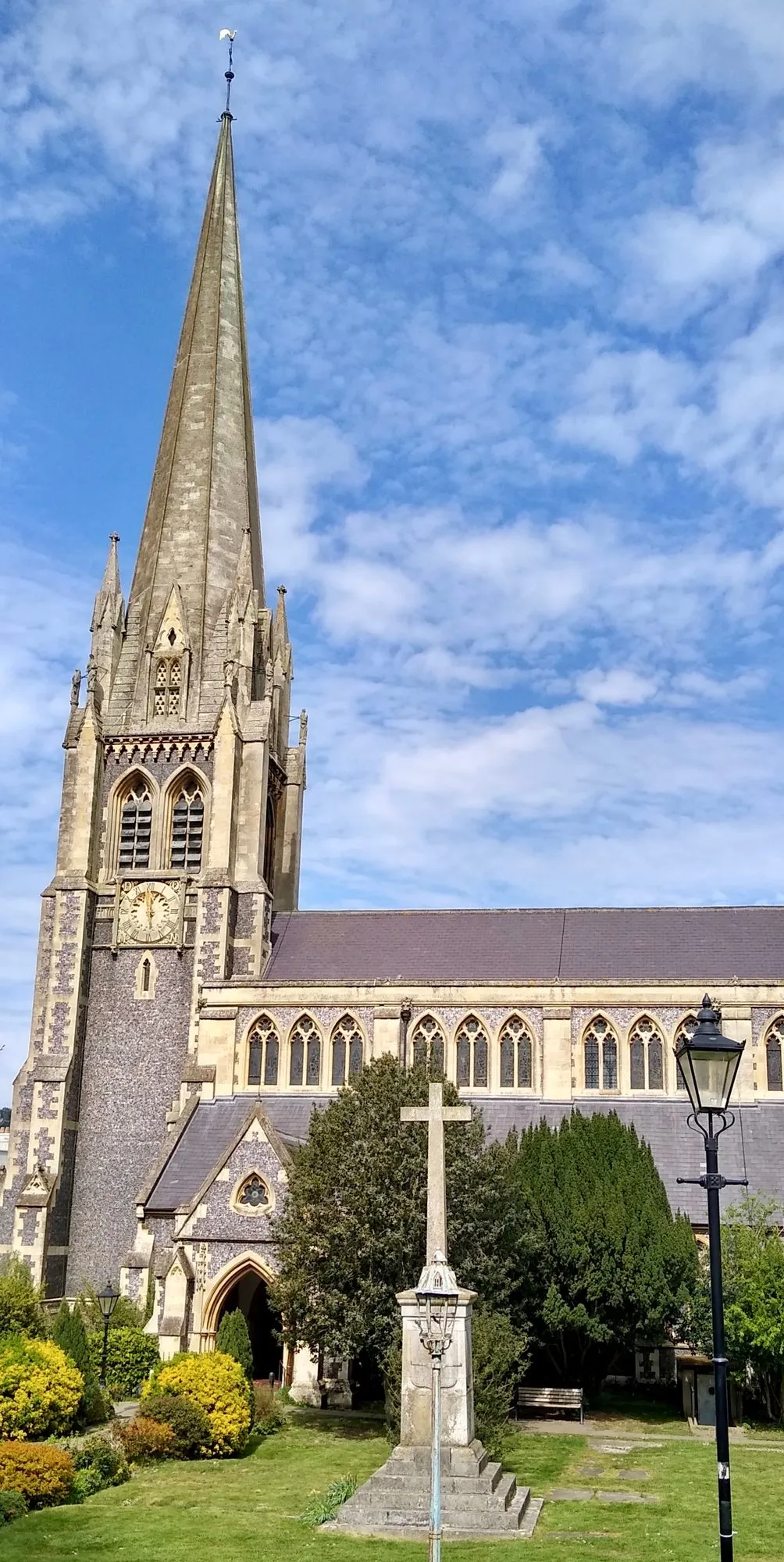
St Martin’s Church, in the centre of Dorking. Photograph: Mertbiol / Wikimedia Commons (public domain).
“Will we get planning?”
Nobody honest will promise you a planning outcome. What we can do is tell you what the likelihood looks like, and why. That comes from reading the policies that actually apply to your plot, looking at what the council has permitted and refused nearby, and being clear about which part of your scheme carries the risk.
Usually one move is doing most of the damage. A kitchen pushed out at the back of a house inside the National Landscape is a different proposition from the same kitchen in a 1960s cul-de-sac on the edge of town. A balcony, the loss of a tree, a change that breaks the roofline: on most projects the risk sits in one or two decisions, and the rest is straightforward.
Once you know which move is the risky one, you have options. Change it, keep it and build the evidence that supports it, or phase the work so the certain part goes ahead first. What you should not do is submit and hope. A refusal and a resubmission can cost the best part of a year.
“What will it really cost?”
The budgets that go wrong are rarely wrong on the build rate. They go wrong on the missing lines: VAT, consultants, the kitchen and bathrooms, landscaping and a contingency of 10 to 15 per cent. In Dorking’s villages, access is a real cost too. A narrow lane with no room for a skip or a delivery lorry adds to the price.
There is also a harder question. An extension adds space; it does not automatically add value. On some homes the ceiling on what the house could sell for is lower than the cost of the work. That is worth knowing before you commit, not after. For a first sense of numbers, try the extension budget tool.
“Who can we trust?”
Two things you can check in a minute. “Architect” is a title protected by law, so anyone using it must be on the Architects Registration Board register: James’s registration number is 088216J. James Williamson Architects is also a RIBA Chartered Practice.
The third is less about credentials. We do not sell a style. What you are buying is someone who knows the order the decisions should happen in, and who will tell you when the honest answer is that you do not need an architect yet.
Where to start in Dorking
The first step is the free 15-minute Clarity Call. We ask about the home, what is not working and what you are hoping to spend, and tell you what we think the smartest next move is. Where a project turns on a real question, the Clarity Pack answers it before you commit to drawings or builders: a site visit, two or three layout options, the planning position and risks named, a structural view and cost bands set against your budget.
For more on the planning side, see our planning advice and feasibility studies page, and for older houses, heritage and conservation.
For more on Mole Valley policy and design guidance, read our guide to extending your home in Mole Valley.
Questions people ask
Which local plan applies to a planning application in Dorking?
The Mole Valley Local Plan 2020 to 2039, adopted by Mole Valley District Council on 15 October 2024. It replaced the older Core Strategy and saved local plan policies, so it is the document your application is judged against.
Can I extend a house in the Green Belt around Dorking?
Often, yes. Extensions in the Green Belt are judged on whether they are proportionate to the original building, meaning the house as first built or as it stood in 1948, so earlier extensions count against what you can add now. The size and form of the addition matter more than they would in the town.
Who will decide my application after 1 April 2027?
East Surrey Council, which takes over planning from Mole Valley District Council along with Elmbridge, Epsom and Ewell, Reigate and Banstead and Tandridge. A permission you already hold stays valid, because it goes with the house, not the council.
Does the Surrey Hills National Landscape stop me extending?
No, but it raises the bar. Permitted development rights are narrower in a National Landscape, and the council looks closely at materials, scale and how an extension sits in views from the hills. A well-judged design that respects the setting is entirely possible.
Not sure where to start? Start here.
Fifteen minutes on the phone with James. We talk through where you are, what you are trying to achieve, and what the sensible next step looks like. There is no pressure and no obligation. Sometimes the right outcome of a call is simply a clearer head.
Book a free 15-minute Clarity Call (opens in a new tab)
No selling. Just a clear view on the smartest next step.