Architects in East Surrey
From 1 April 2027, five councils in the east of the county become one: East Surrey Council. If you live in Elmbridge, Epsom and Ewell, Mole Valley, Reigate and Banstead or Tandridge, that is the council that will decide your planning application from then on.
We are based on the High Street in Woking, a short drive from Cobham, Esher and Dorking, and East Surrey is a regular part of our work. We are currently working on homes in and around Dorking.
Which areas are in East Surrey
East Surrey Council brings together these five areas:
- Elmbridge: Cobham, Esher, Walton-on-Thames, Weybridge, the Moleseys, Claygate and Oxshott
- Epsom and Ewell: Epsom, Ewell and Stoneleigh
- Mole Valley: Dorking, Leatherhead, Ashtead, Bookham and Fetcham
- Reigate and Banstead: Reigate, Redhill, Banstead and Horley
- Tandridge: Oxted, Caterham, Lingfield and Godstone
Woking, Guildford and the rest of the west of the county join West Surrey Council instead. We work there too: see our page on West Surrey.
What the change means for your project
For most homeowners, less than you might think. Planning permissions already granted stay valid. Until East Surrey Council adopts its own local plan, the existing plans and design guidance are expected to carry across. The things that decide most householder applications, such as the Green Belt, conservation areas, the Surrey Hills National Landscape and flood risk along the Thames and the Mole, do not change with the name on the letterhead.
What will change is who you deal with, and over time the policies themselves. Five sets of design guidance will gradually become one. We will keep this page up to date as East Surrey Council publishes its plans.
The rules in each area today
Until East Surrey Council writes its own plan, each part of the new council keeps its own local plan and design guidance. These are the documents a householder application is judged against now:
- Elmbridge: the Core Strategy (2011) and the Development Management Plan (2015), with the Elmbridge Design Code (2024). Householder applications are expected to come with a short Design Code checklist. A replacement local plan was withdrawn in 2025, so these remain the starting point. More on our Cobham and Elmbridge page and in our Elmbridge planning guide.
- Mole Valley: the Mole Valley Local Plan 2020 to 2039, adopted in October 2024. More on our Dorking page and in our Mole Valley planning guide.
- Reigate and Banstead: the Core Strategy (2014, reviewed in 2019 and 2024) and the Development Management Plan (2019, reviewed in 2024).
- Tandridge: the Core Strategy (2008) and the Local Plan Part 2 detailed policies (2014), with neighbourhood plans in places such as Limpsfield, Woldingham and Caterham. A replacement local plan was withdrawn in 2024.
- Epsom and Ewell: a new local plan has been going through examination, so it is worth checking which policies apply on the date your application goes in.
Most of these documents ask similar questions: is the extension in keeping with the house and the street, does it stay subordinate to the original building, and does it leave the neighbours with their light, outlook and privacy. The detail differs, and the detail is often what decides a borderline case.
The setting does a lot of the deciding
Much of East Surrey is Green Belt, from the open land between Cobham, Oxshott and Leatherhead to the countryside around Oxted and Lingfield. A large part of Mole Valley, Reigate and Banstead and Tandridge sits in the Surrey Hills National Landscape. Older towns like Dorking, Reigate and Epsom have conservation areas at their centres, and land along the Thames and the Mole carries flood risk.
Each of those changes what is likely to be approved and how an application needs to be put together. It is worth knowing early which apply to your street, before anyone spends money on detailed drawings. That is often the difference between an application that goes through and one that comes back.
What we see most often
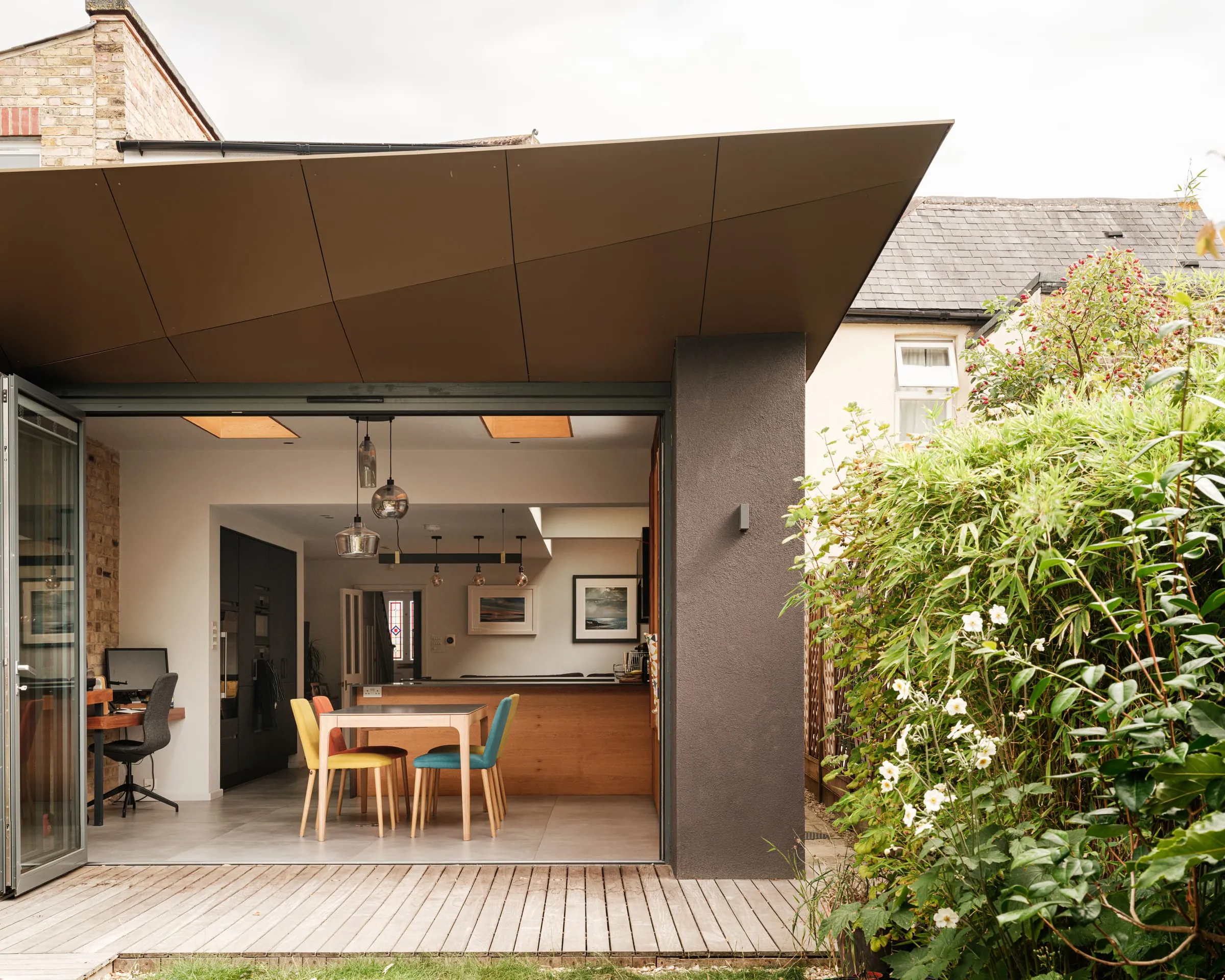
Larger family houses that have been extended more than once, where the rooms at the back no longer work together. Victorian and Edwardian houses on narrower plots in the Moleseys and older town centres. Detached houses in the Green Belt, where every square metre added is judged against the size of the original home. And kitchens split by old structure, like the one we reworked in East Molesey.
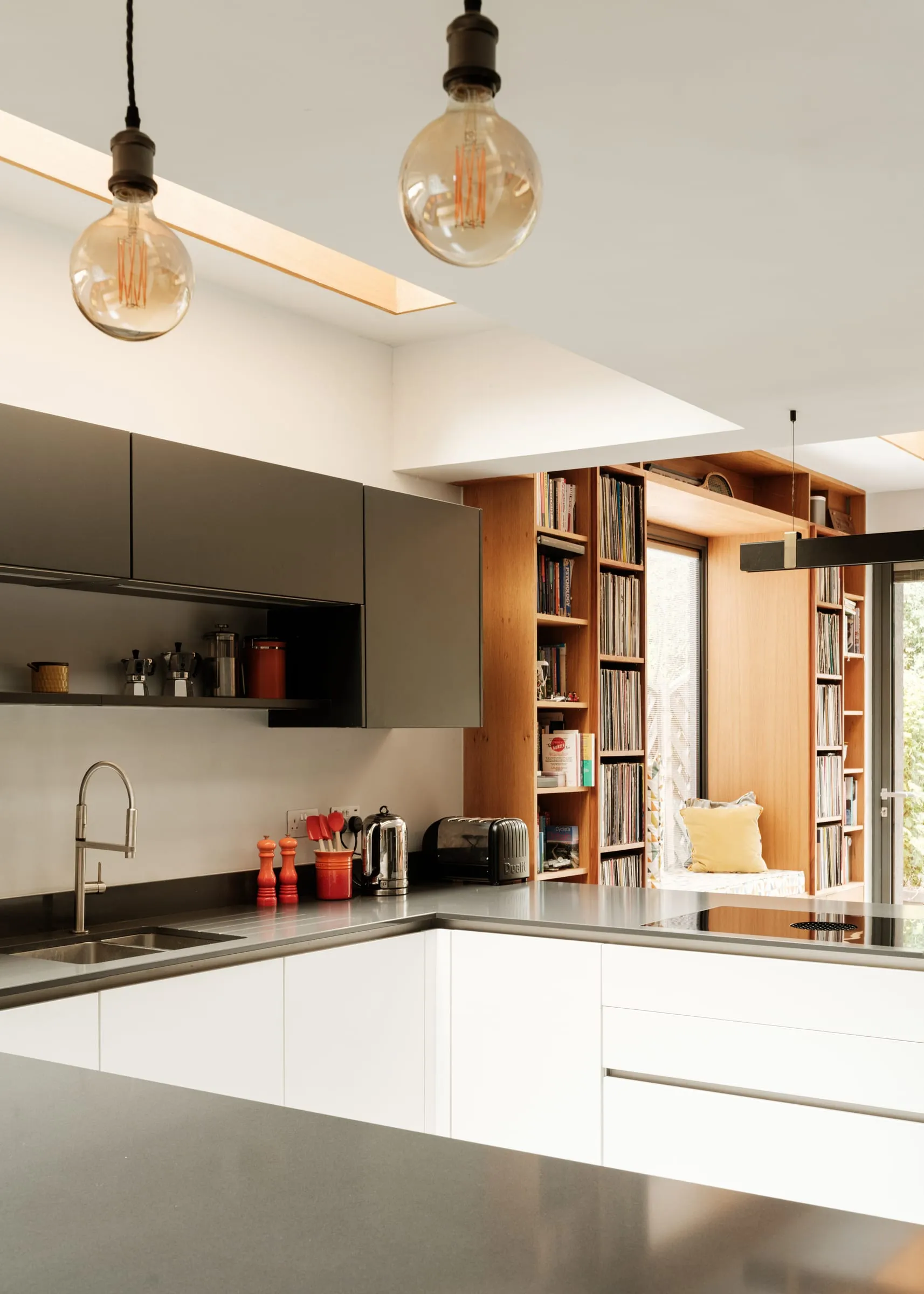
The East Molesey extension, with Martin Swatton Design: a column taken out of the kitchen, steel hidden in the floor and a new rear extension. Photograph: Fred Howarth.
In each case the first question is the same: what is actually making daily life harder? Sometimes the answer is an extension. Sometimes it is a better layout inside the walls you already have, which is cheaper and quicker.
Starting a project in East Surrey
Every project starts with the free 15-minute Clarity Call. If there is something worth testing, the Clarity Pack works through what is realistically achievable on your home, the planning position, the structure and the likely cost bands, before you commit to drawings or builders.
For more on the areas we know best, see our pages on Cobham, Esher and Elmbridge and Dorking and Mole Valley.
Questions people ask
Who will decide my planning application after 1 April 2027?
East Surrey Council. Until 31 March 2027 your borough or district council decides it as now. From 1 April 2027 the new unitary council takes over planning for all five council areas.
Does a planning permission I already have still count?
Yes. A planning permission goes with your home, not with the council that granted it, so it stays valid for its normal time limit and conditions.
Will the planning rules change on 1 April 2027?
Not overnight. Until East Surrey Council adopts its own local plan, the existing local plans and design guidance are expected to carry across, as plans did in earlier reorganisations elsewhere. We will update this page as the council confirms its arrangements.
Should I wait until the new council is in place before applying?
Usually not. Applications made before April 2027 are decided under the current arrangements. What matters more is that the scheme is right for your house and its setting, and that is the same either way.
Not sure where to start? Start here.
Fifteen minutes on the phone with James. We talk through where you are, what you are trying to achieve, and what the sensible next step looks like. There is no pressure and no obligation. Sometimes the right outcome of a call is simply a clearer head.
Book a free 15-minute Clarity Call (opens in a new tab)
No selling. Just a clear view on the smartest next step.