


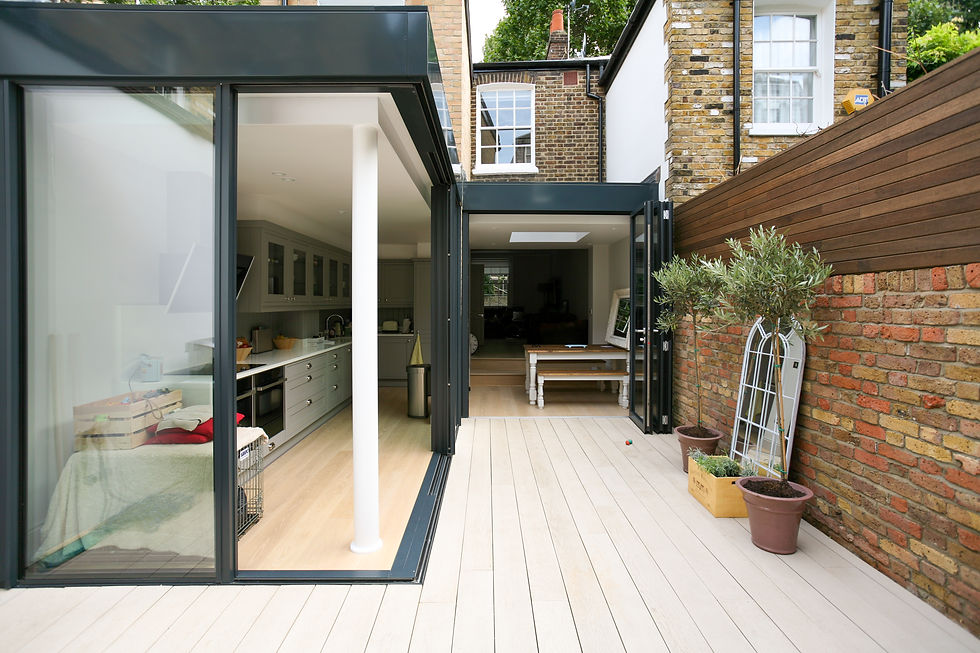
We Need More Space — But We’re Not Sure Where to Start
The kitchen is too small. The rooms feel cut off. You've been talking about fixing it for two years.
Most Surrey families we work with aren't looking for a dramatic transformation. They want their home to function properly — more room to cook, somewhere for the family to be in the same space, a proper connection to the garden.
What's stopping them isn't a lack of ideas. It's a lack of clarity. On what's realistic. On what it will actually cost. On where to start.
That's what we fix first.

What a Single Storey Extension Actually Solves
A single storey extension adds ground floor space — typically to the rear or side of the property. But the square footage is rarely the point.
What most families are solving is a layout problem. A ground floor that was designed for a different era and a different way of living. The goal is a home that works better day to day — not just a bigger version of what you already have.
The difference between a good outcome and a frustrating one is almost always made before building work starts. It's made at the decision stage, when costs are tested, planning is assessed, and the layout is challenged against how you actually live.
Is a Single Storey Extension Right for You?
It usually makes sense when your ground floor no longer supports daily life — and when improving your home is a smarter option than moving.
Most Surrey families we work with love where they live. The street, the school, the community. Moving means giving all of that up, plus stamp duty, agent fees, and the cost of buying something bigger in the same area.
Extending isn't the cheaper option. But for families who want to stay, it's often the right one — provided the numbers stack up and the design is right.


The Questions We Hear Every Time
1. How much does it cost?
In Surrey, single storey extensions typically run £2,500–£3,500 per square metre in construction costs. A 25m² kitchen extension sits roughly between £62,500 and £87,500 before fees, fixtures, and finishes. Specification choices — materials, glazing, structural complexity — move costs significantly. Testing your budget against a realistic scope, before design starts, is one of the most important things we do early on.
2. Do I need planning permission?
Most rear single storey extensions under 3m (semi-detached) or 4m (detached) fall within permitted development and don't need planning permission. Exceptions include conservation areas, Article 4 Direction areas, and side extensions — these almost always need full planning. We confirm the exact position for your property at feasibility stage.
3. How much garden will I lose?
Less than you might think — but the trade-off is real and worth understanding early. We test layouts against your garden as part of our feasibility work, so you know what you're giving up before committing to anything.
4. How disruptive will it be?
Most builds take three to six months on site. You can usually remain in the house throughout. Knowing what's coming and when is what makes it manageable. Surprises don't.
5. Will it add value?
Usually yes — particularly when kitchen and living space is improved in a way that genuinely changes how the home functions. But over-capitalising is a real risk. We factor this into our thinking from the start.
Where Projects Go Wrong
Most expensive mistakes in home extensions happen before building work starts.
A layout designed around an assumption about where a wall can come down — and the engineer says otherwise. A planning application submitted without understanding what the local authority will support — and it gets refused. A builder briefed from drawings without enough detail — and the quotes come back all over the place.
Each of those is recoverable. Each costs time, money, and confidence.
The families who get the best outcomes are the ones who slowed down at the beginning. The ones who tested the budget before the design. Who understood planning before submitting. Who got the sequencing right.
Our process exists to get the sequencing right.
How We Work
Step 1 — Clarity Call (Free)
A 15-minute conversation about your home, your goals, and your constraints. You'll leave knowing whether a single storey extension is the right move — and what the next step looks like.
Step 2 — Feasibility Study
We test realistic layouts against your plot. Assess planning for your specific property. Sense-check your budget against Surrey build costs. Identify structural considerations. You leave knowing what's actually possible — not what you hoped might be.
Step 3 — Design and Planning
Layouts developed around how your family lives. Planning application managed in full where required.
Step 4 — Technical Pack
Detailed drawings and specifications that give builders everything they need to price accurately and build correctly.
Step 5 — Build Support (where appointed)
We stay involved during construction. When unexpected issues arise — and they always do — you have someone who knows the project on hand to make the right call.


