A refusal letter is a bad day. You have paid for drawings, waited eight weeks or more, and the answer is no. It helps to know that a refusal is rarely the end of a project. It is the council’s written list of what it objects to, and once you know exactly what that is, there is usually a way forward.
There are three routes from here: revise the scheme and apply again, appeal to the Planning Inspectorate, or step back and use what permitted development allows. Which one makes sense depends almost entirely on the reasons given. This covers householder applications in England, the kind used for extensions, loft conversions and outbuildings.
Start with the reasons, and the officer’s report
The decision notice lists each reason for refusal and the policies the council says the scheme conflicts with. Read them one at a time. A typical refusal for an extension might say the addition is overbearing on next door, harms the character of the street, or, in the Green Belt, is disproportionate to the original house.
Then find the officer’s report. It is published with the application on the council’s planning website, and it is often more useful than the notice. It shows how the officer weighed each point, what they thought was acceptable, and sometimes what they would have accepted instead. A report that says “a single storey addition here would be acceptable, but the first floor element breaches the 45 degree line” has told you what to change.
Look out for two things. Whether the scheme was refused by the officer under delegated powers, or by the planning committee against the officer’s recommendation. And whether the reasons are specific, such as a measured loss of light, or broad, such as harm to character, with little explanation.
Option one: revise and apply again
If the reasons point at one part of the scheme, changing that part and reapplying is usually the quickest route to a permission. It also lets you talk to the case officer first, which an appeal does not.
A few points to know. There is no longer a free second application: the old “free go” for a resubmission was removed for decisions from 6th December 2023, so a new application pays the full fee. Check the current figure before you apply. The new scheme should answer each reason for refusal directly, and the covering letter should say how. And where a similar scheme has already been refused more than once, or dismissed at appeal, the council can decline to decide a near-identical one, so a resubmission needs to be a real change, not a new cover sheet.
Where the reason is a matter of degree, such as the depth of an extension against a neighbour’s window, a revised scheme is often enough. Pulling the first floor back a metre, dropping an eaves line or moving a window can turn a refusal into an approval without losing much that matters to you.
Option two: appeal to the Planning Inspectorate
An appeal goes to the Planning Inspectorate, which is independent of the council. An inspector looks at the scheme afresh and decides whether it should have been approved. For a householder application:
- you have 12 weeks from the date on the decision notice to appeal
- if an enforcement notice has been served on the same development, the deadline can be as short as 28 days
- there is no fee to appeal
- the appeal is decided in writing, on the application the council saw, its decision, the officer’s report and your reasons for appeal
- no one else can comment at the appeal stage, although the council must tell those who commented on the application that an appeal has been made
You cannot use an appeal to change the scheme. The Inspectorate’s guidance is clear that if an amended design would overcome the refusal, you should make a new application, and that new evidence or a changed scheme submitted with an appeal will be disregarded. So the appeal is a test of whether the council was right about the scheme as it stands.
Each side normally pays its own costs. Either side can apply for an award of costs if the other behaved unreasonably, such as a council refusing for a reason it cannot support with any evidence. If the inspector makes a legal error, the decision can be challenged in the High Court within six weeks, but that is about the law, not a second look at the planning judgement.
The Planning Inspectorate publishes its current average timescales on GOV.UK. Check them when you are deciding, because they move, and they set how long a project waits.
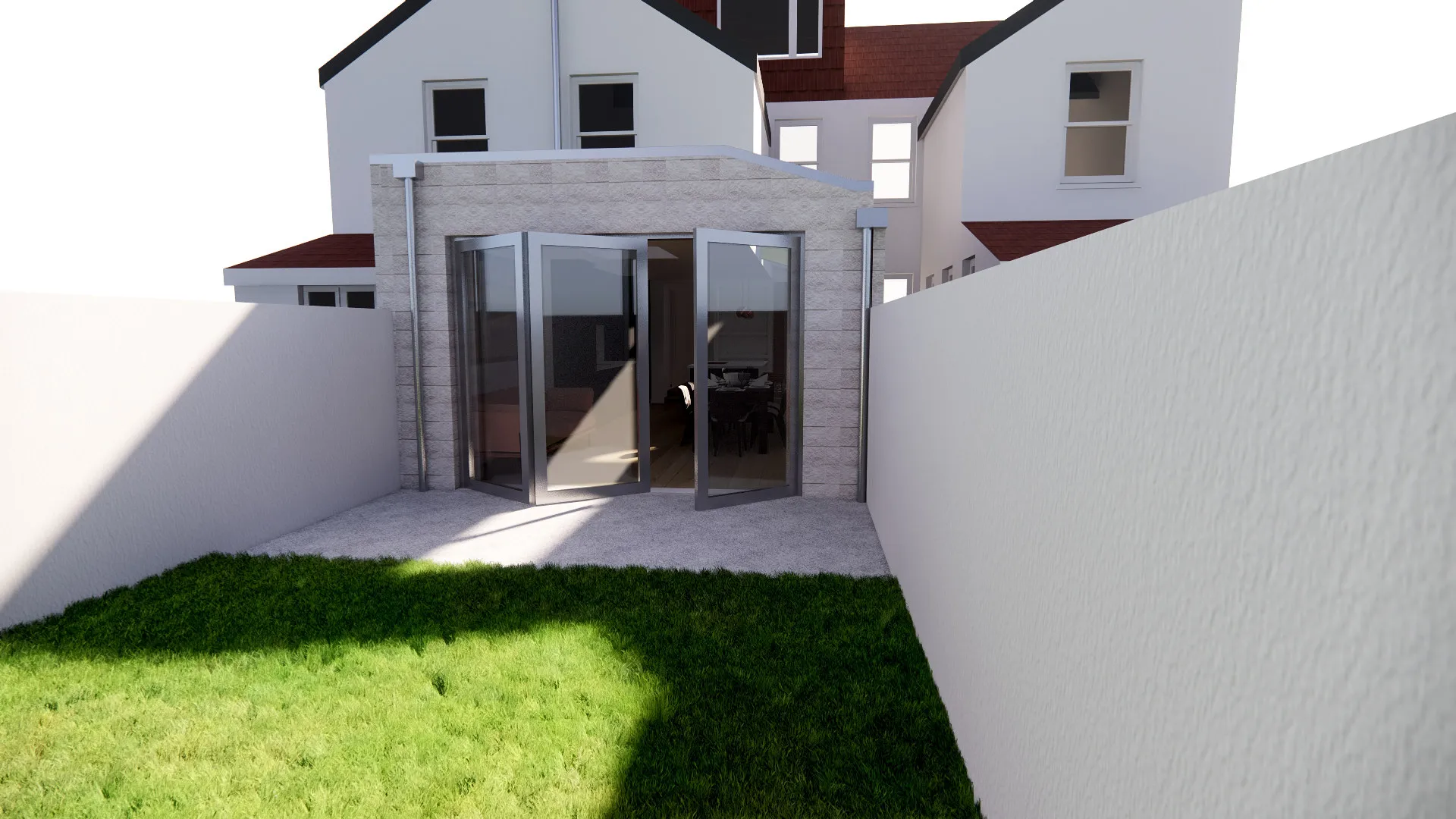
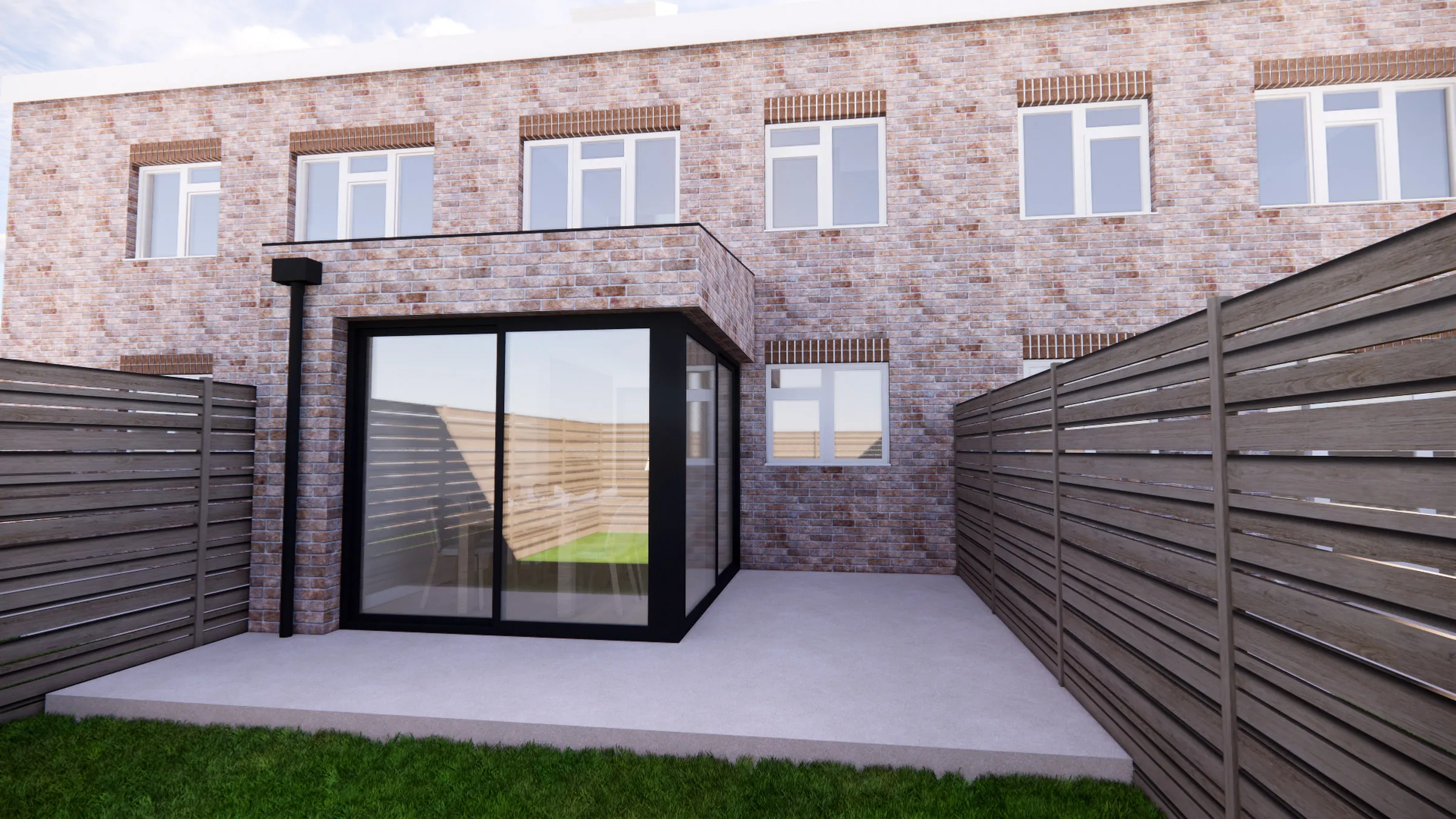
The Croydon wraparound extension: refused by the council, then allowed at appeal. Visualisation: James Williamson Architects.
When an appeal makes sense
An appeal is a strong option when the refusal turns on judgement and the policy supports you. Signs that point that way:
- the officer recommended approval and the planning committee refused against that advice
- the reasons are general, such as harm to character, with little analysis behind them
- the scheme meets the council’s own published guidance, such as its 45 degree test or separation distances, and the refusal does not explain why that is not enough
- similar extensions have been approved nearby, recently, on comparable houses
- you do not want to change the design, because the part the council objects to is the part that makes the project work
It is a weaker option when the scheme plainly conflicts with a firm policy. An extension in the Green Belt that is clearly disproportionate to the original house is the common example, and extending a house in the Green Belt explains why that test is hard to win on appeal without changing the scheme. It is also weaker when the officer’s report shows what would be acceptable and you can live with it. A revised application then usually gets you a permission sooner.
Some people run both at once: a revised scheme to the council and an appeal on the original. That can be sensible when timing matters, but it costs more, and a council can decline to decide a resubmission that is too close to a scheme under appeal. Talk it through before you commit to it.
Option three: step back to permitted development
Sometimes the refused scheme had a permitted development version inside it. A single storey rear extension, or a loft within the volume limits, may be possible without planning permission at all. That is not a way around the refusal, because the council was asked about something else. It is a legitimate fallback, and it can also support an appeal or a revised application, because what you could build anyway can be taken into account when the larger scheme is judged. Confirm it with a lawful development certificate before relying on it.
What our own record shows
We publish our planning record. Since 2020, 98% of the sites we have taken through planning gained permission in the end: 79 of 81. The figures cover 108 decisions on 81 sites between March 2020 and October 2026, from council notices and our own records. Three appeals were allowed.
“In the end” matters in that sentence. Some of those sites were refused first, and permission came through a better scheme or an appeal. The planning record explains how it is counted. It is a record, not a promise for your house: nobody can promise a planning outcome.
What we do after a refusal
We read the decision notice and the officer’s report, then the policies they cite and the decisions on similar houses nearby. That usually shows quickly whether the refusal is a design problem or a judgement worth challenging. If it is a design problem, we say which change answers it and what it costs you in floor area or light. If an appeal is the better route, we say so, and why, and how long the wait is likely to be. The planning advice and feasibility service covers this kind of review.
If you have a refusal in front of you and the 12 week clock is running, the free 15-minute Clarity Call is a quick way to work out which route fits.
Questions people ask about planning refusals
How long do I have to appeal a householder planning refusal? 12 weeks from the date on the decision notice. If an enforcement notice has been served on the same development, the deadline can be much shorter, as little as 28 days. For listed building consent and most other planning decisions it is six months.
Does a planning appeal cost anything? There is no fee to appeal to the Planning Inspectorate. The cost is in preparing the case. Each side normally pays its own costs, unless one behaves unreasonably and the other is awarded costs.
Can I change my plans during an appeal? No. The appeal is decided on the scheme the council refused. If a changed design would overcome the reasons for refusal, the Inspectorate’s guidance is to make a new planning application instead.